The journey from a working prototype on a desk to a mass-manufactured product is filled with hidden traps. One common mistake we see is designing around components that are out of stock. We always validate the supply chain availability of critical ICs before finalizing the schematic. We utilize tools that integrate with major distributors to check real-time stock levels and lifecycle status. This proactive approach prevents the costly and time-consuming need to redesign a board just as it is about to enter production due to a single missing resistor or regulator. Our Production & Sourcing team manages this risk daily.
Design for Manufacturing, or DFM, is the practice of designing boards that machines can easily build. This includes simple things like ensuring there is enough clearance between components for the soldering nozzle, and ensuring fiducial markers are present for optical alignment. We also pay close attention to the orientation of components to minimize shadowing effects during reflow soldering. By adhering to IPC standards and the specific capabilities of our manufacturing partners, we ensure high yield rates and reliable solder joints.
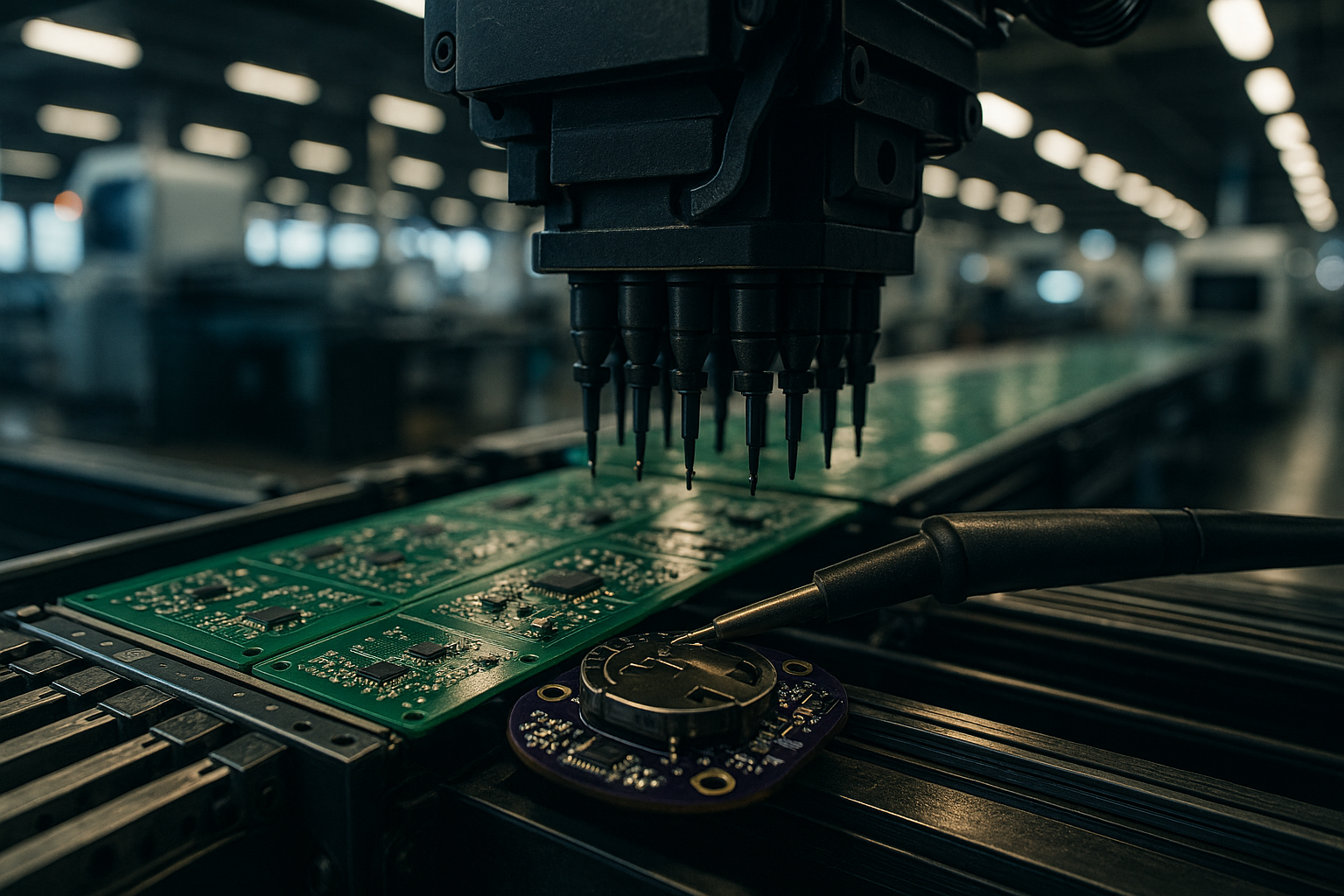
Panelization is another key aspect. Manufacturing one board at a time is slow. We design panels that contain multiple copies of the board, held together by "mouse bites" or V-scores, allowing for rapid assembly and separation. We carefully design the panel frame to provide rigidity during the assembly process and to include tooling holes and fiducials required by the pick-and-place machines. An optimized panel design can significantly reduce the material waste and the per-unit assembly cost. This is a standard part of our PCB Layout service.
Testing must also be considered early. We place test points on all critical nets, allowing pogo-pin fixtures to quickly verify the voltage levels and signal integrity on the production line. We design these test points to be accessible from a single side of the board to simplify the fixture design. We also implement automated test scripts that can program the firmware, run a self-test, and log the results to a database. This ensures that every unit shipping to a customer has been fully validated.
By considering these manufacturing constraints during the design phase, we reduce the scrap rate and ensure that the transition from 1 unit to 1000 units is smooth and cost-effective. We believe that a product is not truly designed until it can be manufactured reliably at scale. Our holistic approach to DFM ensures that your innovation can be delivered to the market with the quality and consistency that your customers expect. If you are struggling with production issues, our Consultation services can help identify the root cause.